
Norton Shores Previous Resident Sources
A backward address history needs more than one source. Use the current parcel tools only to establish the exact property, then shift to older records that have their own date ranges. Current ownership and a mailing address are distinct from an occupant, so neither should be treated as proof of who lived at a Norton Shores address. The table separates the sources by era and purpose, making it easier to choose the next record rather than repeating a current search.
| Source | Years It Covers | Where Held | What It Shows |
|---|---|---|---|
| BS&A property and county GIS | Current record view | Muskegon County online tools | Exact situs, PIN, legal and tax description |
| County Register of Deeds database | 1859-present database portion | Online catalog and index; county office alternatives | Recorded documents and indexed parties |
| Hackley deed materials | Index 1838-1887; records 1838-1928 | Hackley Library genealogy collection | Earlier deed research channel |
| Norton Township assessments | 1863-1890 and 1900-1940 | Archives of Michigan county guide | Assessment-era property context |
| Sanborn map collection | 1911-July 1950 | Library of Congress gallery | Historic map sheets, subject to sheet coverage |
Start with the source nearest the period in question. A recent transfer calls for the recorder index. An address that reaches into the nineteenth century may need the Hackley material or the assessment records. Map coverage should never be assumed from a collection title, since Norton Shores must be verified sheet by sheet.
Each channel has a different role. The recorder's online catalog is the first index for a recorded document, while the county office can perform a search or provide a certified copy. Hackley is a separate library channel for older deed material. The state archives guide identifies specific township-era holdings. Moving among those sources is normal when a single Norton Shores address spans more than one record system.
Norton Shores Address Foundation
The starting point is the current situs address, which is the property's physical location. Search the Muskegon County BS&A property system and the county GIS Property Viewer to compare the situs, parcel identification number, and legal or tax description. The pair is useful for setting the address exactly before older documents introduce subdivisions, lot numbers, or earlier road labels.
Do not use a current PIN by itself as a historic key. Parcels can change, and historic documents are best followed through the legal description, document date and type, named grantor and grantee, plus the linked document image when available. The current property display establishes the foundation; it does not complete a record of past residents.
Note: Save the exact situs and legal description before searching an older index.
Norton Shores Previous Resident Deeds
A deed chain follows changes in recorded ownership backward. The Muskegon County Register of Deeds web index is a catalog and index, so try spelling variants when a party name does not appear at first. The county's Record Search information says its database portion begins in 1859 and continues to the present. Office searches and certified copies provide an alternative path when an online lookup does not settle the question.
- Use the current parcel record to identify the situs and legal description.
- Find the latest ownership transfer in the recorder index and open its linked image when available.
- Record the date, document type, legal description, grantor, and grantee exactly as shown.
- Search the seller as a prior grantee to locate that person's earlier acquisition.
- Repeat the process backward, keeping each conveyance in date order.
- Set aside releases, easements, and other document types unless they directly transfer ownership.
The flow is simple to state but demands careful comparison: current address to legal description, current deed to earlier purchase, then earlier purchase to the next one. A name match without the same legal description can join the wrong property to the chain.
Norton Shores Deed Terms
Older recorded documents use terms that can make a backward search look more difficult than it is. Define them from the document itself, then keep the same terminology in research notes.
- Grantor
- The party transferring an interest in the recorded document.
- Grantee
- The party receiving that interest. In a prior purchase, this may be the later seller you are tracing backward.
- Chain of title
- An ordered sequence of recorded transfers for the same property, checked through the legal description rather than a street label alone.
- Legal description
- The lot, block, subdivision, section, or similar formal property description used to identify land in recorded documents.
Not every recorded item represents a sale. Grants, releases, easements, and other filings belong in the record history, yet they should be distinguished from a conveyance when identifying past owners and the people who may have occupied the address.
Norton Shores Previous Residents Archives
When the online recorder period is too late, use a separate library access channel rather than forcing a modern index to answer an older question. The Hackley Library genealogy holdings list deed indexes from 1838-1887 and deed records from 1838-1928. Those ranges overlap the earlier years that need more than the county database portion.
The Archives of Michigan Muskegon County guide also identifies Norton Township assessment records for 1863-1890 and 1900-1940. It lists tax records for 1877-1879, 1884, 1887-1888, and 1892. These are era-specific aids, not a continuous promise of annual residence records.
A household may appear in a tax or assessment context without proving it occupied the property. Pair a name there with a deed, directory, census, or notice before calling it part of a previous-resident trail. This distinction is especially important when a name appears only once. The record may identify an owner, an agent, or another party connected with the parcel instead of a person who made the address a home.
Norton Shores Previous Resident Maps
Maps help test whether the address itself existed in the same form at the time of a record. The Library of Congress Sanborn collection spans 1911 to July 1950 across 116 Muskegon County sheets. Check the gallery sheet by sheet before treating it as coverage for Norton Shores. A map can clarify a street layout, lot setting, or nearby feature, but it is not a resident list.
The Lakeshore Museum research archive also lists tax records, plat maps, directories, community-organization records, and finding aids.
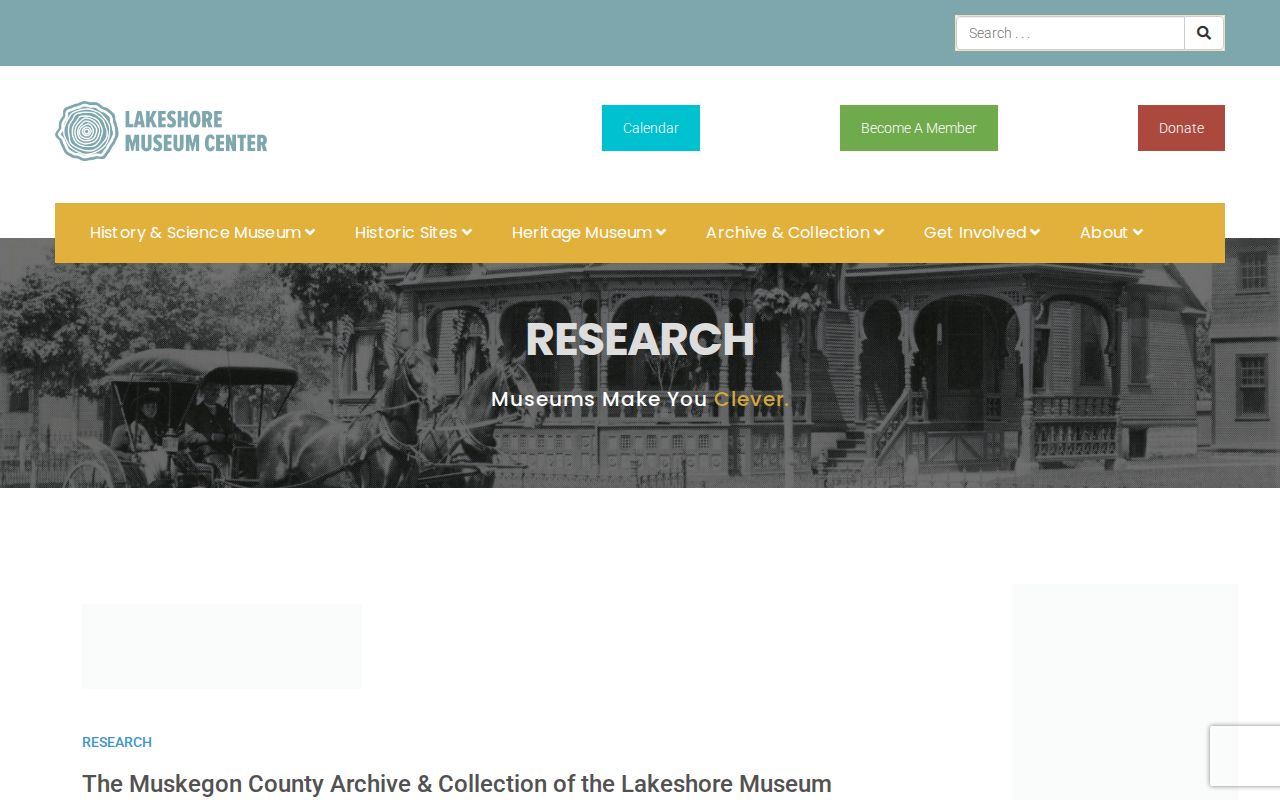
Archive materials can place an address and a household in local context after the deed sequence has established which property is being studied.
Norton Shores Previous Residents Trail
Ownership is only one part of the address story. To identify who lived there before, pair directory observations with census records and then look for newspaper notices that fit the same address or household. Historical directories belong to the Norton Shores Directory Book; use the collection details there instead of treating a lone listing as a complete address history. Search the relevant year, compare names and address forms, and then test the connection with a census record for the period.
- Set a dated deed or assessment record beside the closest available directory year.
- Check the directory's street arrangement if the volume provides one.
- Compare the printed household with the relevant census record.
- Look for a notice or obituary that matches the name, place, and approximate date.
Early results may use Norton Township or Muskegon instead of Norton Shores. Keep those labels in the search because the city charter was adopted in 1968, after many historic records had already been created. A directory result, census household, and notice do not need to use identical punctuation or street forms to merit comparison. They do need to line up on the period, household names, and property context.
Norton Shores Previous Resident Notices
Newspapers can provide context that a deed never records, such as a move, family connection, or death notice. The Muskegon Area District Library microfilm service offers Chronicle microfilm from 1869-2018, NewsBank full text from 1997 to today, and page scans from September 2018 to today. Its obituary requests are limited to the Chronicle and require a name, date, and place. The library states a turnaround of about 30 business days for those requests.
The MADL microfilm page is the source for the newspaper and obituary access details.
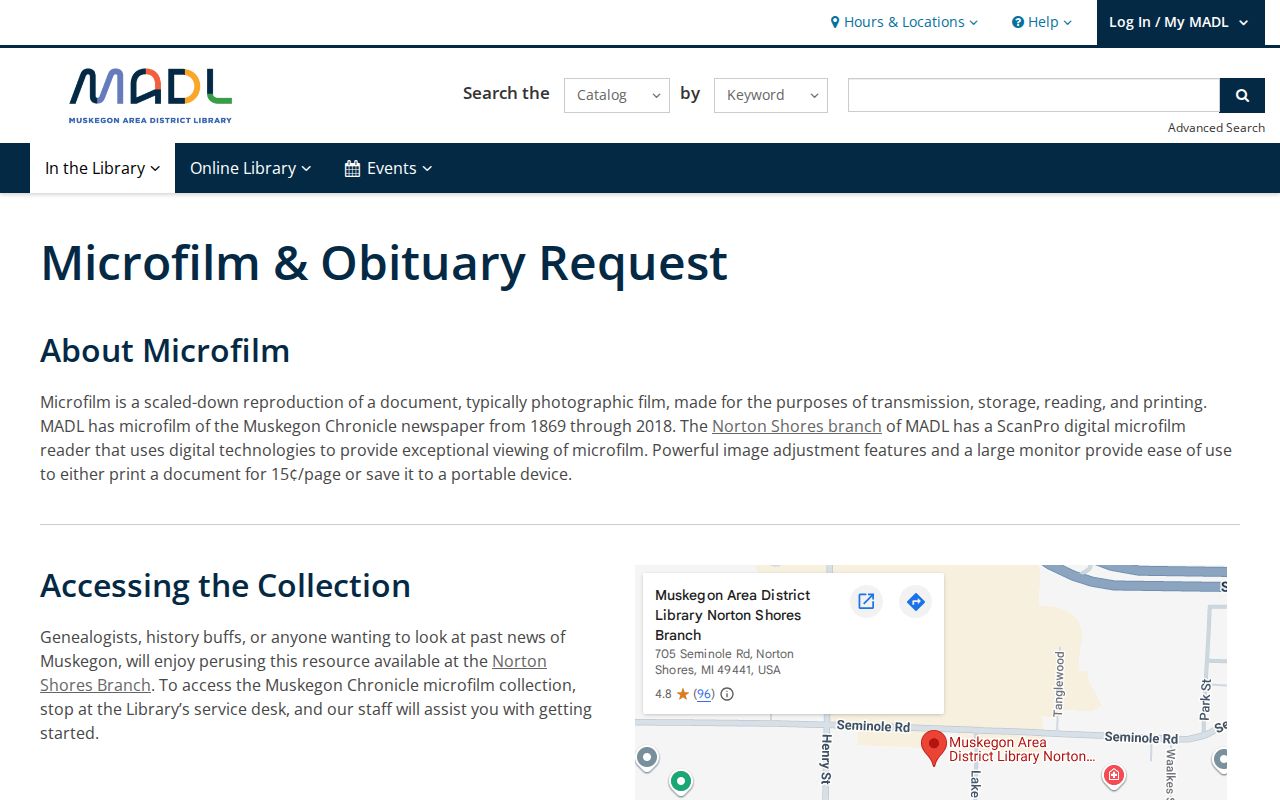
A notice is strongest when its name, date, and location agree with the document trail already built for the address.
Norton Shores Township Labels
Place labels matter in a long address history. Norton Shores became a city in 1968, so earlier assessment, deed, directory, map, and newspaper research can refer to Norton Township or Muskegon. Search each term when an older address seems absent. Do not modernize the historic label in a citation, because that can make a result harder to find again.
The recorded eras overlap, but they are not interchangeable. Hackley's deed index begins in 1838, the county database portion begins in 1859, and the identified Norton Township assessments begin in 1863. Later map sheets start in 1911. A result from one era should lead to the source that can verify it in the next era, rather than being stretched across years it does not cover. That is how a house history remains tied to dated records.
Lawful personal research. Use address history for family history, estate questions, civic context, or curiosity about a home. Do not use names or records to harass, target, or harm any person.
Note: A careful file distinguishes an owner, a mail recipient, and a documented occupant.